Lidong Yu

VLA · World models · End-to-end driving

Autonomous-driving algorithms since 2019 — UISEE (Nanjing AI Research Institute), NIO, DeepRoute.ai, Horizon Robotics, NVIDIA and Neolix, across perception, tracking, data loops and end-to-end driving. Left Neolix in November 2026; now an independent researcher working on landing VLA and world models.
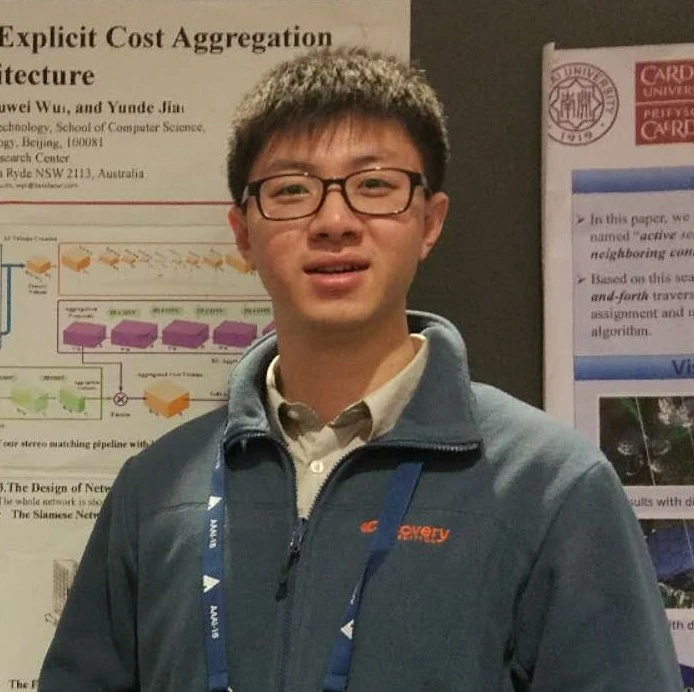
Independent researcher Beijing, China Open to full-time and advisory roles
Lidong Yu

Focus

VLA / vision-language-action modelsWorld models and World Action ModelsEnd-to-end autonomous drivingData closed loops and auto-labellingPerception: detection, tracking, lanesReinforcement-learning post-training

Experience

2026.11 — present

Independent research

Free researcher

Independent research since leaving Neolix: VLA, world models (WAM) and end-to-end driving.

    2025.08 — 2026.11

    Neolix Technology (Beijing) Co., Ltd.

    Head of AD Algorithms · AD Division II
    38-person algorithm org · ~8,700 GPUs

    Own the algorithm architecture across perception, end-to-end driving and world models: one group query-based model unifies single-task and multi-task training, perception is refactored to fit E2E, and a two-stage pretrain plus world model takes VLA to production readiness.

    • Unified single-task and multi-task training behind one group query-based model: multi-head → data-friendly single-head, rebalancing task weights at token level (BEV / image tokens) instead of task-loss level.
    • A single query-based model covers object detection, lane detection, occupancy network, E2E traffic-light detection and the navigation model; lane and traffic-light detection became a navi-based static E2E model that gives upstream decisions a strong prior.
    • Two-stage pretraining: LLM distillation from Cosmos / VGGT (CoT, 3D geometry, 3D OD, lane, failsafe, scene recognition) plus perception-model inception; controllable iteration with frozen head / frozen backbone and data added at any time.
    • AR-based trajectory prediction with multi-task fine-tuning, a CoT debugger, multi-modal diffusion and RL post-training; the general world model uses D4RT for unified parallel AR plus 3D insight, with conditional injection from language / layout / trajectory.
    • AI-native and RaaS transformation: VLM auto triage, agent skills driving evaluation and simulation, simulator auto checker, and agent-driven front-end / back-end development and customer service.
    VLAWorld ModelGroup QueryOccupancyRL post-trainingCosmosVGGT
    2024.07 — 2025.08

    NVIDIA

    Principal Engineer · Free IC, Autonomous Vehicle Department
    End-to-end driving and world models

    Evolved perception models into a two-stage end-to-end stack and then into one-stage Alpamayo; owned the backbone pretrain / fine-tune / post-training framework and Cosmos world-model pretraining plus render research.

    • Perception → two-stage E2E: lane detection went from segment-based (what-you-see-is-what-you-get, with better super-resolution, geometric precision, BEV multi-scale fusion and dynamic multi-resolution DCN) to query-based (static E2E with navi info, intersections, split/merge and lane changes) and then to token-based.
    • Token-based lane detection unlocked the jump from two-stage to one-stage Alpamayo: all perception elements are tokenized autoregressively, supporting upstream conditional SA and downstream debugger visualization.
    • PNC → one-stage: planning was model-ized, single-mode → multi-mode regression, regression → AR → diffusion; backbones distilled from Cosmos / Qwen / Llama with CoT, 3D geometry and AD multi-task inception.
    • World model: Cosmos pretraining → render research, distilled from VGGT and Qwen; the E2E data closed loop uses offline perception models for auto-labelling and VLM for auto mining.
    E2EAlpamayoCosmosDistillationDiffusion planningTokenization

    Publications

    3D Visual Illusion Depth Estimation

    Chengtang Yao, Zhidan Liu, Jiaxi Zeng, Lidong Yu, Yuwei Wu, Yunde Jia

    Diving into the Fusion of Monocular Priors for Generalized Stereo Matching

    Chengtang Yao, Lidong Yu, Zhidan Liu, Jiaxi Zeng, Yuwei Wu, Yunde Jia

    Sparse Point Guided 3D Lane Detection

    Chengtang Yao, Lidong Yu, Yuwei Wu, Yunde Jia

    Deep Stereo Matching With Explicit Cost Aggregation Sub-Architecture

    Lidong Yu, Yucheng Wang, Yuwei Wu, Yunde Jia

    Open source

    Single-object tracking with feature disentanglement, adapted from PySOT; ships with a technical report and the project6 page.
    2020-09
    Reppoint-TrackingJupyter Notebook
    Wires the mmdet detector and RepPoints representation into a complete multi-object-tracking training and evaluation framework — my largest engineering repo.
    2020-09
    Reference implementation of the AAAI 2018 paper: RAN, an explicit cost-aggregation sub-network that plugs into existing stereo matchers.
    2020-05
    The main line of my monocular depth work: region support plus a coarse-to-fine depth regression network — the primary repo of the region-support series.
    2020-09
    Explicit context mapping for stereo matching, aimed at weak-texture and repetitive-texture regions.
    2020-09
    Interpretable stereo matching at pixel-set granularity, with an emphasis on visualising intermediate results.
    2020-09
    PyTorch reproduction of World Models (Ha & Schmidhuber): VAE, RNN world model and controller.
    2019-06
    gym-carPython
    Experimental code that closes a perception + controller loop inside a self-built simulator — the seed of my move from perception into navigation and control.
    2019-08

    Notes

    World-Action Model survey

    A single narrative line through the 2024–2026 literature on world models, driving world models and world-action models, with a capability taxonomy and an evaluation lens.

    siteWorld models / WAM / Survey