Ch 6 · 后训练(§6)
从"通才"到"专才":相机 / 机器人 / 自动驾驶
预训练 WFM 是"世界通才"(Ch5)。后训练=用小数据微调到具体 Physical AI 场景。Cosmos 给了三个范例:相机可控 3D 世界、机器人操作、多视图自动驾驶。基于论文 §6 原文 + 原图。
核心范式(呼应 Ch0):预训练通才 → 小数据后训练专才。原文强调"因为有预训练底座,后训练数据可以小得多"——这正是 foundation model 对自驾/机器人省数据的价值。
6.0 · 三个后训练范例总览 §6 / Table 21
| 场景 | 模型 | 条件 Condition |
|---|---|---|
| 6.1 相机控制 | Video2World-Sample-CameraCond | Text + Image + Cameras(位姿) |
| 6.2 机器人操作 | Video2World-Sample-Instruction / ActionCond | Text + Video / Action |
| 6.3 自动驾驶 | Video2World-Sample-MultiView | 多视图(多相机) + Text/轨迹 |
6.1 · 相机控制 → 可导航 3D 世界 §6.1
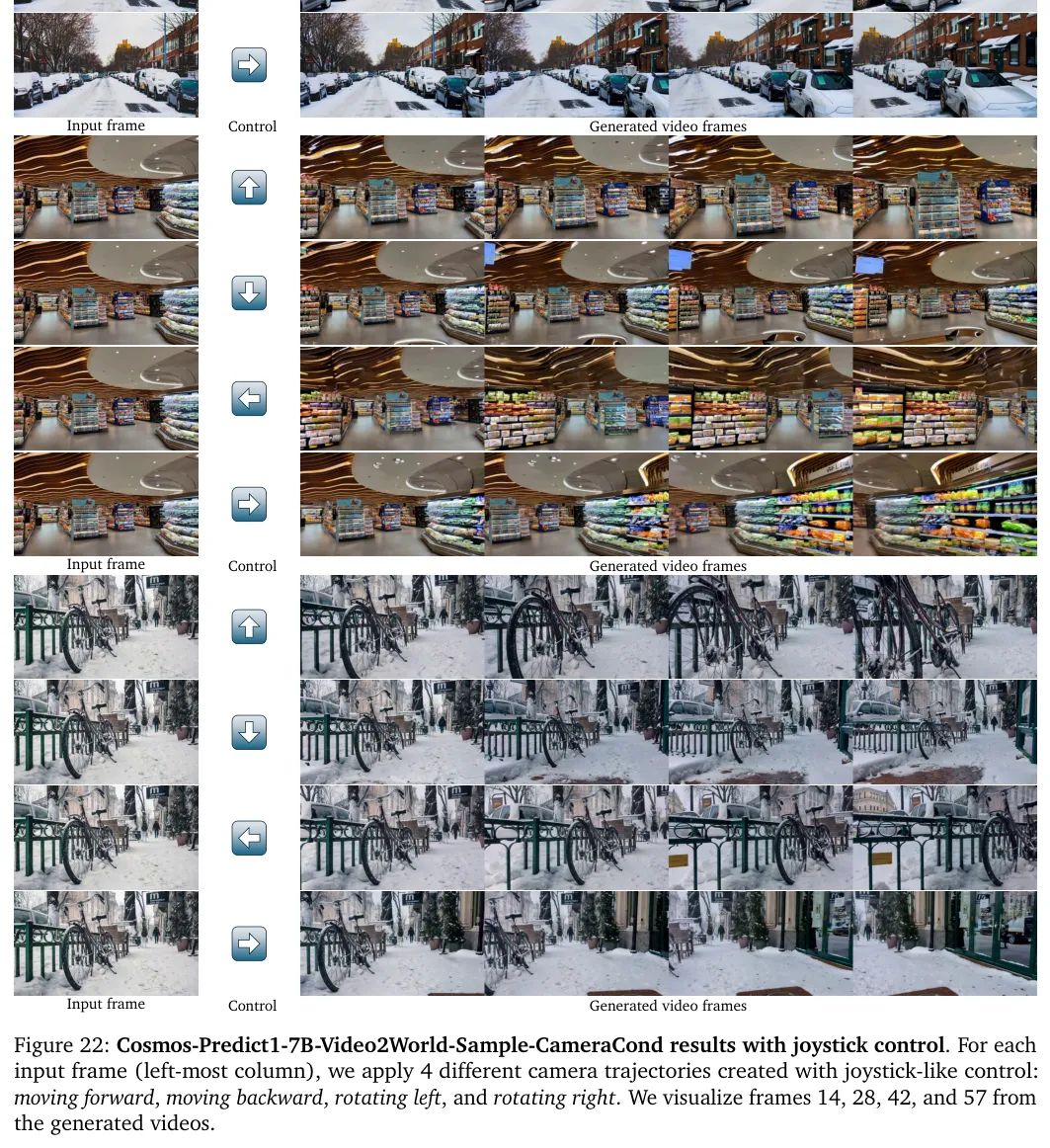
原文:"Through camera pose conditioning, we integrate camera control into Cosmos-Predict1-7B-Video2World, making it an effective 3D world simulator ... generating 3D worlds from a single reference input image ... produce temporally coherent and 3D-consistent video simulations from the specified camera trajectories."
把相机位姿作为条件微调进 WFM → 给一张图 + 一条相机轨迹,生成沿该轨迹漫游的、几何一致的 3D 世界视频(视角变化和场景 3D 结构对齐)。等于把世界模型变成一个"可自由移动摄像机的 3D 模拟器"。
6.2 · 机器人操作 → 规划器 / 模拟器 §6.2
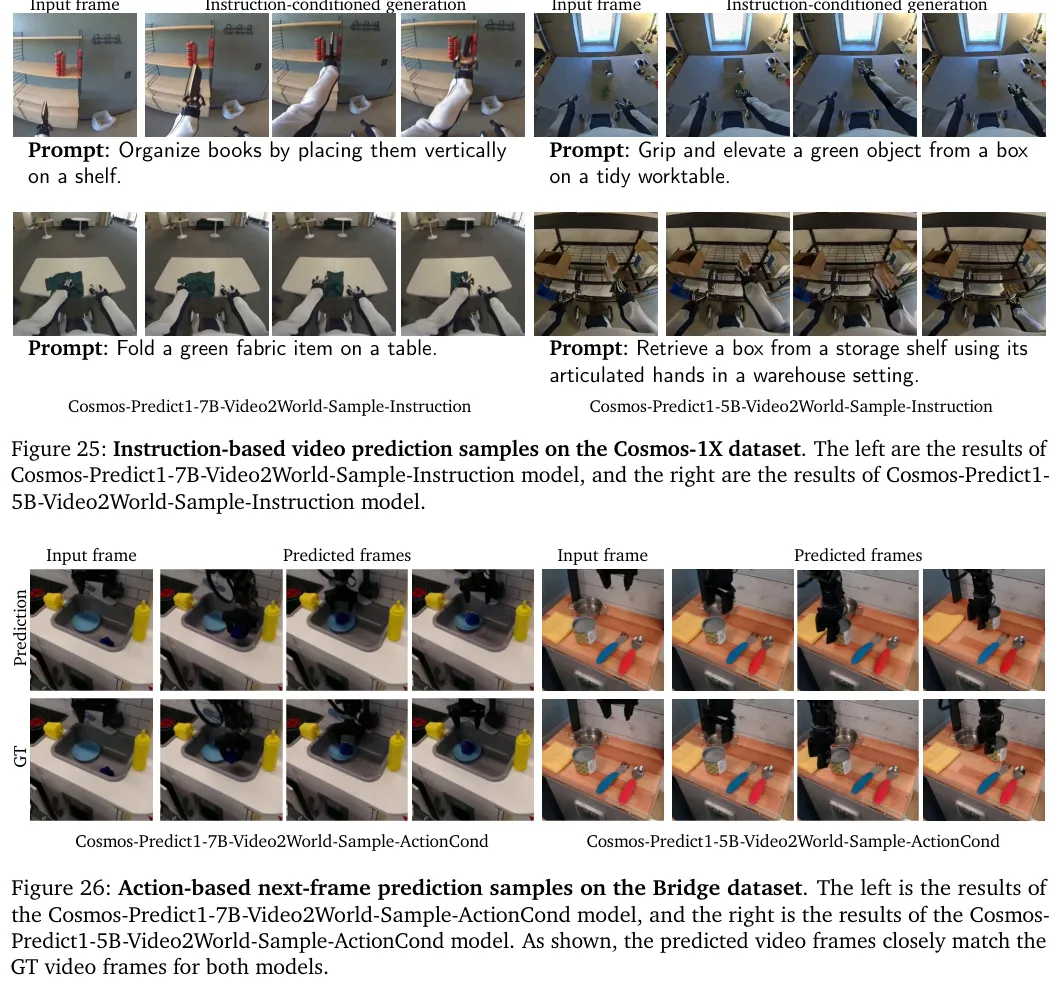
原文:"fine-tune ... for two tasks: (1) instruction-based video prediction ... input is the current video frame ... and a text instruction ... output is a predicted video of the robot following the instruction. (2) action-based next-frame prediction ... input is the current video frame ... and an action vector ... output is the predicted next frame ... run autoregressively."
两种玩法:
- 指令 → 视频:当前帧 + 文本指令 → 预测机器人执行该指令的视频(高层规划/想象)。
- 动作 → 下一帧:当前帧 + 动作向量 → 预测下一帧;给一串动作就自回归滚动出整段执行视频(可当"神经模拟器",在里面试动作)。
6.3 · 自动驾驶 → 多视图世界模型 §6.3
🚗 这一节对自驾最相关
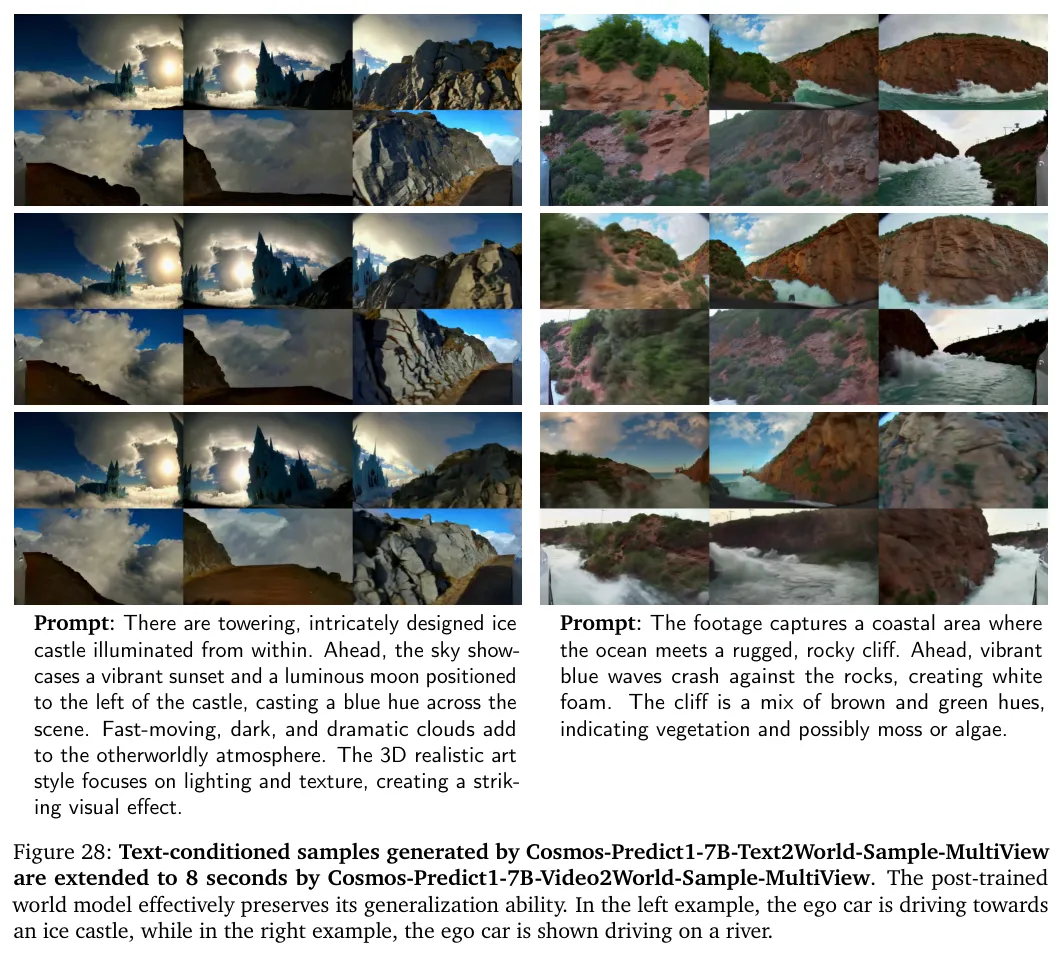
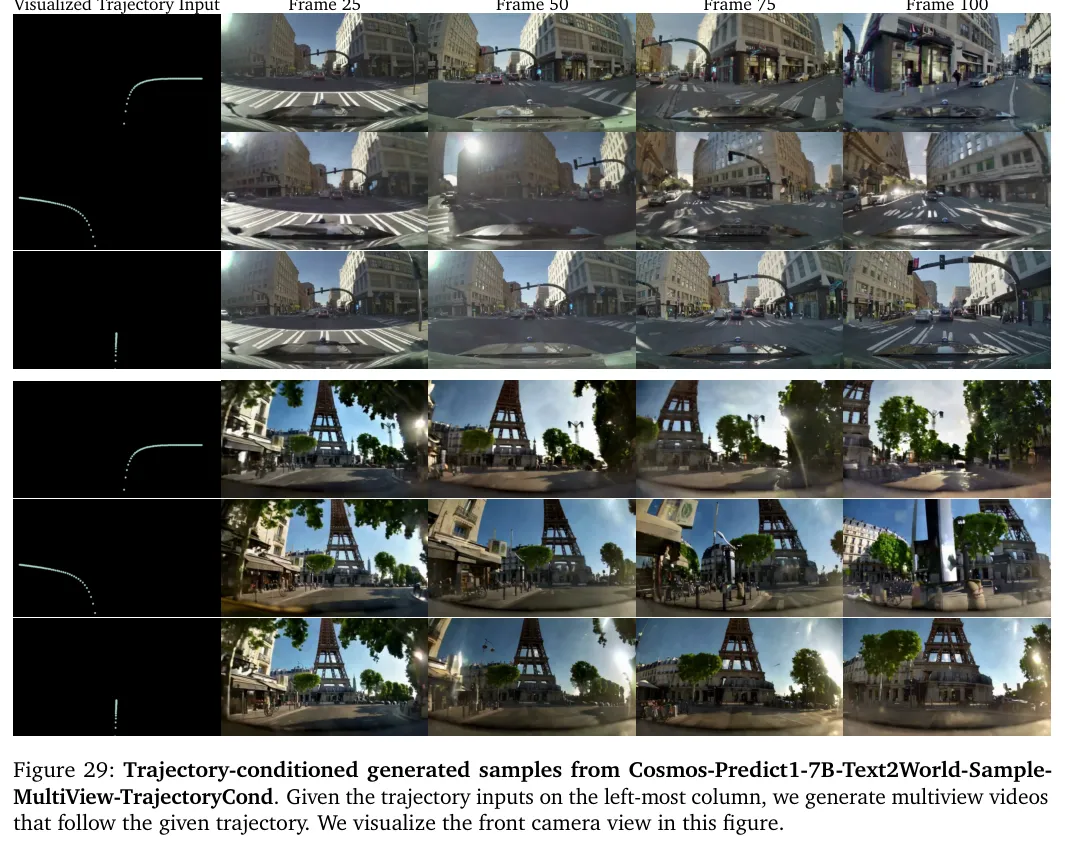
原文:"A world model for in-the-wild driving scenes ... a powerful simulation engine for training autonomous driving agents. As most autonomous vehicles are equipped with multiple cameras ... an ideal world model ... should also be a multi-view one, preferably matching the precise setup of the sensors in the target vehicle."
把预训练 WFM 微调成多视图驾驶世界模型(匹配车上多相机布局)→ 作为训练自驾 agent 的仿真引擎:可文本/轨迹条件生成多路环视驾驶视频,造长尾/安全场景数据、做闭环。这正是"世界模型当数据引擎 + 闭环仿真"在自驾的落地。
贯穿全书的一句话
Cosmos 的完整故事:数据清洗(§3) → Tokenizer 压缩(§4) → 预训练扩散/自回归 WFM(§5) → 小数据后训练到相机/机器人/自驾(§6)。对自驾,它既能造数据(多视图长尾场景)又能做闭环仿真训 agent——这就是"世界模型是自驾数据引擎"的具体兑现。
← 回 主页 看全书导航;或从 Ch1 扩散基础 / Ch4 Tokenizer 复习。
诚实边界:本章场景/条件/模型名引自论文 §6 原文(标注小节 + Table 21);原图 fig22/26/28/29(按 figs.json 校准)配逐字英文 caption。各任务的具体数据集/微调超参见论文对应小节与官方
cosmos-predict1;本页聚焦"做什么、怎么条件化、对自驾的意义"。